


Just as we embark on another dominant victory by the Modi Government. With an unhindered majority, the ruling government have a unique opportunity to truly transform India. Lead by a controversial leader who proclaimed transformative-clean leadership, where results fall short of the bold proclamations. However when one looks at the picture devoid of the loud rhetoric and social media blitz, the truth lies somewhere in between. India as a country, presents challenges that is so seemingly impossible that it takes god like tenacity to reform and transform the country.
I would like to leave the past behind with all the rhetoric and look forward 2019 and beyond. While the current government’s report card is far from transformative, yet it isn’t so bleak that they don’t deserve a second term. Yet, it is critical to not fall victim to populism and bury the country in the new Hindu rate of growth at 6-7% far below the double digit potential.
So what must India do in the next 5 years to truly transform?
Key policy areas to focus:
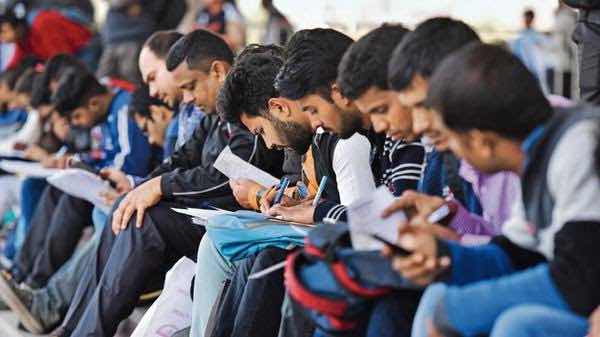
Biggest area along with land is labor reforms that is holding back development and job creation. While this is a political hot potato the expectation was for India to have laid the grounds for taking this on in a second term and therefore a missed opportunity

Banking reforms need to be focused on KYC controls and its implementation. Second, area to reform is the credit appraisal proces, which needs greater transparency and systems. For starters there is a need for a process of generating credit reports for individuals, and secondly focus on the scoring systems both internal within banks and publicly available scoring
Professionalizing PSU bank boards, currently since PSU banks are largely government owned its filled with bureaucrats, this needs to be converted into professionals. Furthermore the executive needs to attract talent and therefore culture, compensation and management needs to a focus to manage the huge asset size these banks carry in their balance sheet
Much like the judiciary the Central bank must have an arm’s length relationship with government for the health of the financial system, better monetary and fiscal policy implementation. RBI is not an additional source for funding fiscal deficit, it’s a lender of last resort, all interference to be removed

India’s education spend is below 4% which is significantly lower than China’s current spend, that is not having the demographic swell of youth that India has. Since 2009 India has seen the rise of Education startups, with a combination of online education and greater focus on the certification process Government has to increase the reach and participation in education. This further requires democratisation of the education curriculum, which is dictated by NCERT, the focus needs to shift to certification as against tightly controlling curriculum. Curriculum needs to be federated to one or two systems aligned with the international systems.
Another focus for education reforms should be the funding of research, the number of research papers that India generates is disproportionately low to the size of the education system, India is currently ranked below Canada at #13 miles behind US and China, IIT is marginally ahead of NUS.
Another focus for education reforms should be the funding of research, the number of research papers that India generates is disproportionately low to the size of the education system, India is currently ranked below Canada at #13 miles behind US and China, IIT is marginally ahead of NUS.
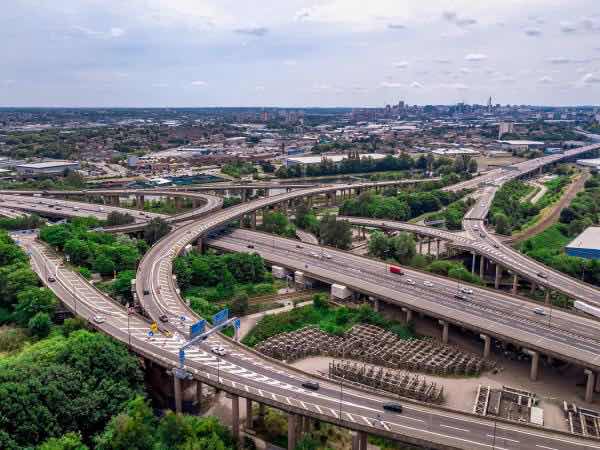
Delivery of Infrastructure projects and focus on construction, at the heart of China’s development was a construction machinery of such capacity that now China has to focus the capacity across the border to utilise the massive build capacity. India is hamstrung by the availability of quality capital and management of large projects. For the next 10 years India needs to build up their road and railway infrastructure not just for creating urban mobility but also to manage supply chain by developing cheaper modes of transportation including. Therefore focus on 3 key areas, development of road capacity upwards of 25,000 KMS per year, railway privatisation and building up of high speed railway systems by upgrading lines to increase reliability and monitoring. The number of railway accidents were 73 in 2018 this should be reduced to near zero, Indian railways has been one of the most profitable railways since 2007 also with an improving safety record now the focus needs to be on capacity build up and modernisation of lines.

Build up of cities, India’s per capita spend on urbanisation is $17 compared to China’s $116. This reflects in the number of cities India has developed and the quality of services in their cities. India has 40 cities compared to China’s 662. The plans are to develop a modest 100 cities in 5 years. The smart city project failed to gather the necessary momentum because of the poor outlay of 100crores as compared to a minimum outlay needed of at least 4 times. The second problem that slows all infrastructure projects in India is the fund utilisation, currently the fund utilisation of smart cities in India is at 1.3%. Funds outlay is at an average of 10Cr per city over 3 years since its launch. While the ideas set are great such as credit scoring cities and the overall smart development model. The management and execution remain India’s biggest impediment for all infrastructure projects

For business growth India needs the strength of a judiciary to support enforceability of law and order and resolution of conflicts. India can never be a safe place to do business in the absence of an independent and robust judiciary. Today the judiciary is buried with 3.3Cr cases in the backlog and we have a panicking Judiciary that remains understaffed and unimaginative. India has 19 judges per million, compared to 159 in China and 450 in Russia. Clearing the backlog combined with a filter that prevents frivolous cases being admitted in courts is the immediate necessity. The second is where there needs to be self service through technology where we have small cases being quickly resolved.

Power sector still remains one of the biggest problem, while the green energy has gained up to 11% of the total power generated, coal constitutes 57% of the installed capacity and coal plants are under immense distress, largely on account of supply constraints. Due to cost of coal and availability of water that is critical for power generation. This is further amplified by the fact number of these plants have signed high cost PPAs. This is resulting in huge losses lead by Adani and Tatas who are likely to create large unserviceable assets in the financial system. This is a critical problem that requires immediate attention as a large number of plants run a high debt default risk.
CEA recently announced India is going to be a power surplus country for the first time in generation, while this along with focus on green energy has been this government’s marquee sectors there are miles to go. The statistic to focus on here is, China with a similar population consumes 6 times the power India consumes. India’s power generation growth in 2018 slowed to 4% as against a historical average of 7%. India’s per capita power consumption is 1,000KW, 1/4th of China and significantly lower than developed economies that consume upwards of 6,000 KW per capita.

India’s nuclear program has plateaued after all the hoopla over the nuclear deal wherein the gross power generation growth has dropped from 38 TWh in 2016 to 35TWh in 2018. The planned capacity addition that was set at 63,000 MW by 2031-32 was cut by a third to 23,000MW. This will increase reliance on the now hamstrung coal energy. Reasons are most likely, lack of funding, supply constraints. To address this there is a need to focus capacity build on Thorium reactors, this reduces external reliance on uranium imports, which require negotiations with the international suppliers. Further there is a need to focus on safety of the plants to address growing concerns after Fukushima.

Uniform civil code, India needs to be seen as a robust multi cultural society, while there is rising religious tension there is a need for a uniform civil code where there is no concessions to any on religion, caste or for that matter no law based on social divisions.
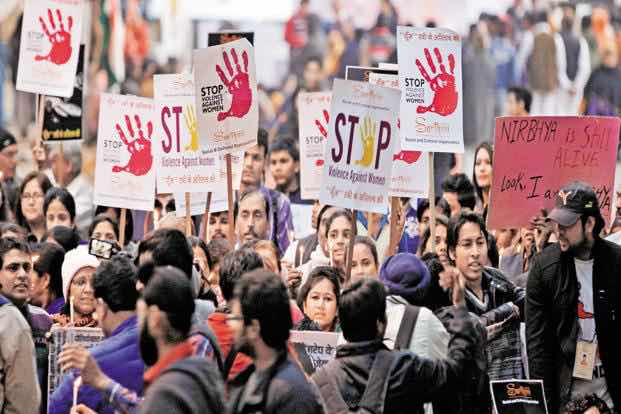
Law and order is critical for development and India’s safest city is ironically Delhi ranked 42 below Moscow, Kuala Lumpur ranked 10 rungs above and Mexico City. While police remains a state subject the rate of technology adoption, training and modernisation of the police are too slow to manage the security situation in the country. Further politicisation of the police force that remains in many states the private security force for powerful politicians remain a problem that stalls the dissemination of justice.
These above is merely the tip of the iceberg but are major policy and administrative gaps that prevents us from using superlatives like India is a rising super power devoid of cynicism. If the country does not focus on the above key reforms it could turn the demographic dividend into a demographic disaster. The last thing the country needs is a disillusioned youth with youth unemployment rate at record highs of 16%, the highest in 20 years. These are dangerous signs that could spell disaster if unaddressed and drowned in all the political rhetoric. We are at an inflection point where India could truly transform under clean leadership or remain the Indian Elephant instead of the Bengal Tiger.


