India's Transformation Map

India's five year roadmap and opportunities ahead.

I'm Back

After a brief hiatus, I'm back to blogging.

Applications2Apps and Enterprise ecosystems

Revolutionizing conventional enterprise systems.

Living in the Clouds

Us humans have walked the planet earth for over 200,000 years. In this time we have seen a stone age, bronze age, the industrial revolution and now we are entering a new age which is just as pivotal, what could be called the age of the cloud.

Keeping tabs

I practically live in my computer, but sort of ties you down at home or you got to lug around the laptop all over town. There are a host of tablet beings launched making the task of choosing one painful. So let’s flip it around, why not look at what I want my tablet to do and not do.

Monday, May 30, 2011

Crowd in the Cloud

In the pre-cloud era people dedicated time to maintaining well cataloged diaries to record birthdays, tasks, maintain contacts and meeting notes. Today people directly assign tasks to you, birthday reminders pop out of nowhere and contact information is automatically synced based on people’s Facebook profiles. Tiny droplets make an ocean and today we have the means to aggregate the tiny droplets, thanks to crowd sourcing tools.

This has a huge impact on business as well, one example is Tech support. Tech support now is a culmination of video logs on YouTube, so customers know what the problem is before they contact the help desk, they just want the support personnel to fix it and do it quick. Yet, it amazes me how the likes of HP and Apple mostly have marketing videos on YouTube and the product fixes and workarounds are mostly posted by random amateur techies. I am sure both the customer and HP would rather have the fix coming from the authorized technical support personnel rather than some amateur videos. Further call centers can no longer run robotic checklists with impatient customers who know exactly what they want.

Today’s savvy customers are quite freely embracing these tools and get their job done faster, while the corporate machinery is playing catch-up. Probably because those defining the organization strategies are not yet plugged-in and still thinking call centers and off-shoring when it comes to customer service, not to mention the challenges managing compliance and risk.

Social media is not just a buzz word that the marketing teams flaunt and put out attractive videos, these tools are transforming the way we service our customers, significantly improving efficiencies and re-defining SLAs. The bottom-line is companies today need to be nimble and have a holistic social media strategy, in short they need expert advice.

Sunday, May 22, 2011

Never remember never forget

Today everyone is forgetful. I don’t remember birthdays, holidays, meetings and my tasks for the day. My faithful smart phone does it for me. Three thousand years back the Vedas, a Hindu religious text, was handed down generations by word of mouth and took a lifetime to perfect. Generations were dedicated to carrying the body of work intact. Then the Chinese invented paper and everything changed. People still chanted the Vedas but there were some who dedicated their years for a different cause. This in turn spurned mass education programs and eventually the industrial revolution.

Today we are confronted with a different problem we have an information overload, there are approximately over 1.5 million books in the western world alone. Google dedicated six years using sophisticated scanning equipment with robotic arms to digitize them, just so that we can search and find anything we want. Google enables us to solve almost any problem in the world just by helping us find the solution. So the challenge is no longer how but about finding the right solution to a problem.

Having all the facts in your finger tips is no longer a factor of memory but how accessible your enterprise information is. So now what matters is the ideas I can bring to the table and leave the facts to my faithful gadgets in the cloud.

Saturday, May 21, 2011

One for all to all for me

Pre-Cloud the world assumed people in general are the same, you had one news paper, one News channel and people ran the same trail for years. Today everything from your news to your coffee is personalized. You determine how much milk you want in your coffee and the temperature if you may. You chose your morning news from a collection of topics on YouTube channels and custom build your morning paper using your faithful e-reader. Everyone does not want to be like the other and believe they are different. This mindset change is pretty dramatic and revolutionizes the way we service customers. From a world where everything was commoditized and mass produced, we are in a world where everything is personalized, custom built and yet mass produced.

Friday, May 20, 2011

The old world and the new

One might wonder, if people had the same routine for the last 60 years, what has changed? People have been reading the news, the weather report, going to coffee shops and meetings since the last 100 years, so why are we so plugged in? Because depending on how you look at it everything has changed or nothing. My father visited the Grand Canyon and took a helicopter ride across the canyon in 15 mins, I hiked it over 2 days. My father still tells me he did what I did over 2 days in 15 mins and I still maintain he has not seen the canyon.

Thursday, May 19, 2011

Living in the cloud (Blog series)

Us humans have walked the planet earth for over 200,000 years. In this time we have seen a stone age, bronze age, the industrial revolution and now we are entering a new age which is just as pivotal, what could be called the age of the cloud. Yet when you live through each day so much seems to have changed yet nothing.

I wake up in the morning brush my teeth, grab some coffee, check the weather, catch the morning news, read the paper, go for a quick run, shower and check my calendar, drive down to meet a client, check in to the nearest coffee shop and grab a quick breakfast just in time to make it to my appointment. Probably fits the description of any urbanite in the last 60 years. So then what’s changed?

Let’s quickly rewind the morning scene and play it back a little differently now. Wake up in the morning brush my teeth, grab some coffee, log into Wunderground check the hourly forecast, switch to my news reader catch my personalized news, turn on my trail tracking software go for a run, compare the speeds of my last 5 runs, check my phone calendar, jump into my car turn on the GPS, spot a coffee shop on the way to the client office, grab a quick breakfast , whoops I’m late, so just dial into a video conference and continue to enjoy my breakfast.

Thursday, February 17, 2011

Indian IT services industry, the way forward

India's growth story

As India continues to grow and surpass unchartered territories one tends to wonder is the trend likely to last forever? The ruling government projects that we will average a growth rate upwards of 8% for the next decade and replicate a China like growth story. One might argue that if China can, so can India, in fact economists like Sanjeev Sanyal predict that we will experience an Asian renaissance much like Europe.

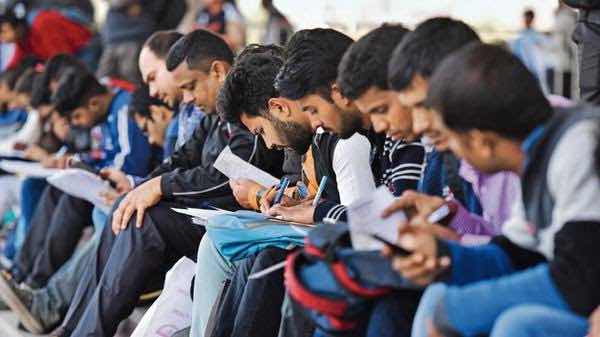
Undoubtedly India’s growth has been miraculous, unlike China, the growth has been despite poor policy implementation, corrupt-unstable governments and snail paced infrastructure development. We have 700 million people who are in the employable age; the number is expected to rise to 829 million by 2015. Which means close to 72% of the population will be young and employable. The demographic change will increase our savings rate close to 35% of GDP, reducing our reliance on external capital to fund our growth. We are potentially entering a period of prosperity not witnessed for more than a thousand years in India.

Post liberalization India has been in a tearing hurry to make up for decades of mediocrity and catch-up with the western economies. While growth has been a constant, the sectors have varied over the last two decades. India’s growth was initially led by IT, now we have sectors like manufacturing, banking, financial services and infrastructure becoming the engines of growth.

The IT services growth has been fascinating, now accounting for 8-10% of the GDP and 30% of India’s exports. Over the last few decades the primary driver for the IT off-shoring business was cost arbitrage. This was largely on account of our large pool of high skilled engineers and wage disparity. But after 20 years of 30% growth, there are close to 2.3 million people employed in the IT sector and the country will be close to a 100,000 engineers short to drive a 30% linear growth

Education

India generates close to 500,000 engineering and science graduates in year and if IT sector has to continue to experience a linear growth over the years institutes will have to proportionately increase the number of engineering seats. This increasingly seems harder as education in the country remains hamstrung. Education reforms are taking forever and the system is struggling to remain relevant. Education sector remains closed to eagerly waiting foreign institutions and therefore will depend on government spends and domestic private investors. Private investors are politically backed, corrupt and have little expertise in running these education institutions. The irony is India spends a meager 4.1% (U.S and U.K both spend 5.7% and 5.3%) of GDP on education which is a paltry sum for a knowledge economy, with 68% literacy and a booming IT sector.

While institutes attempt to crank out more engineers the quality of engineers becomes a challenge. Companies struggle to increase the graduate’s proficiency through factory like training academies that are expected to take in semi-skilled engineering graduates and convert them to highly skilled software engineers. As supply fails to keep pace with the growth salaries are expected to increase by 40% in 2011, further narrowing margins and increasing prices.

What next?

So the writing is on the wall, IT services have to move up the value chain. Given western economies are not yet ready to open up their purse strings, Indian IT services might be a low cost option to IBMs and Accentures of the world. We are already seeing two trends to back the theory, IT companies are beginning to invest into IT consulting, solution accelerators, disruptive technologies and innovations. On the other hand Accenture and IBM are expanding their investments in India. But will service industry transform to eventually change the face of the Indian sweat shops as one US senator commented? Going by recent trends, that is the next logical step.

Tuesday, January 11, 2011

IPL auction : Country, cricket, dollars and more drama

Country, cricket or just dollars?


There's still a generation that firmly believes cricket must be played for the pride of the country, not for money. In fact some of them feel IPL cricketers are overpaid and that’s hastening retirement in cricket. I suggest let us take an honest look at the numbers in comparison to other international sports. 78.5 million dollars was spent so far in the IPL auction. The numbers saw a lot of jaws drop, but IPL is still a fair distance from becoming the highest paying sporting event.


Lets draw a few comparisons with another international team sport like basketball. Currently basketball is the third highest paying team sport int the world. The average salary for an NBA player is $5m, compared to IPL's $565,000. The highest paid NBA player last season was Tracy McGrady who landed a whopping $23m contract compared to Gambhir who won $2.4m. NBA pays 10 times more for any player compared to the IPL. One might argue the US GDP is 10 times India's, but sporting events are not measured by GDP but by TRP. The average number of viewers for the NBA finals last year was 3.6m when compared to 8.34m viewers per day throughout the tournament. This puts the enormity of the IPL in perspective, so let us take note of the facts before we get carried away by the number of millionair cricketers. So if you think this is too much there is more to come folks.


The rich did get richer…but what’s cricket got to do with this?


So while many believe in the 80-20 rule, the IPLs 20-20 formula seems to work on a 50-20 rule, in other words 50% of the $78.5m was spent on 20% of the players. The top 20% won bids at an average cost of $1.5m per player. A mere $10m was spent on the remaining 50% at an average cost of $158,696, or 1/10 the cost of the top 28 players. So, not everyone gets rich at the IPL.What this also demonstrates is that not all franchisee owners were smart bidders. They overpaid for some and were left with a lot less for other valuable players. Since there is ai salary cap per team, bid price is an equation of the amount left in the kitty and not the intrinsic value per player. A few glaring instances are Irfan Pathan, who was paid $1.9m compared to Mike Hussey, ranked No.3 in the ODI rankings, was paid a measly $0.43m. Another instance is of misplaced investments was Ravindra Jadeja who doesn't even make the Indian playing 11 , fetched $950,000. Compare this with Daniel Vettori, one of the most economical one day bowlers ranked No.1 in ODIs and a useful lower order batsman, was sold for $550,000. So auctioning is a complex subject and I am no expert, but certainly think the minimum bid price must be fixed based on a performance based pricing to ensure it not just all business after all.


Veterans ignored


The once famed left hand legends, Lara and Ganguly, find no place in the IPL. I am left searching for clues to understand why Ganguly persists after making three poor shows in the IPL and almost crossing the age limit. Someone who was once the god of offside batting looked rather meek against the swashbuckling T20 players. Class is permanent but does not always translate to runs on the cricket field.


Lara’s case is also understandable as no one has seen him bat since 2007 World Cup and to expect people to put their money on him might be premature. He might stand a chance if he can perform in the forthcoming English season and prove his mettle before he chooses to go under the hammer.


While the West Indians don’t seem to care if Lara played in the IPL or not; the Bongs went bonkers, burnt effigies and staged protests. It was not until King Khan soothed their nerves by saying “There is no KKR without Dada”, no one heard him whisper “As a mentor”.

Share

Twitter Delicious Facebook Digg Stumbleupon Favorites More